Angled Electrodes
(bent electrode fibers)
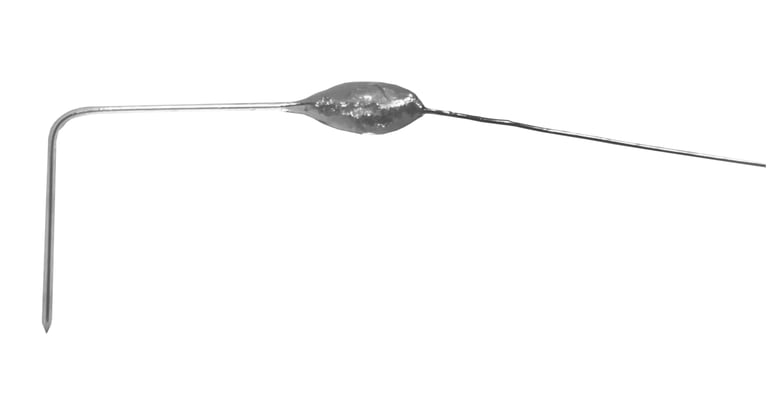
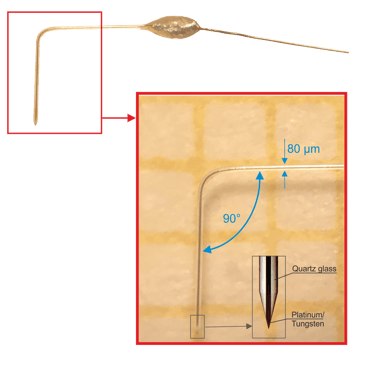
Thomas quartz/platinum-tungsten fiber microelectrodes permit the recording of extracellular potentials with excellent single-unit isolation, signal to noise-ratio and temporal stability. Thomas RECORDING GmbH offers bent electrode fibers that are used, for example, in optical imaging applications. We can offer all of our fiber microelectrodes (i.e., electrodes, tetrodes, and heptodes) in bent versions. The impedance and insulation between individual conductors of tetrodesn and heptodes are not affected by bending the fibers. The fiber electrodes can be equipped with suitable connectors for your preamplifier (e.g., Omnetics). We supply specific holders for mounting the electrode to your microelectrode manipulator. We build your specific electrode according to your requirements. Do not hesitste to contact us with your specific request!
Product Description
Key Features
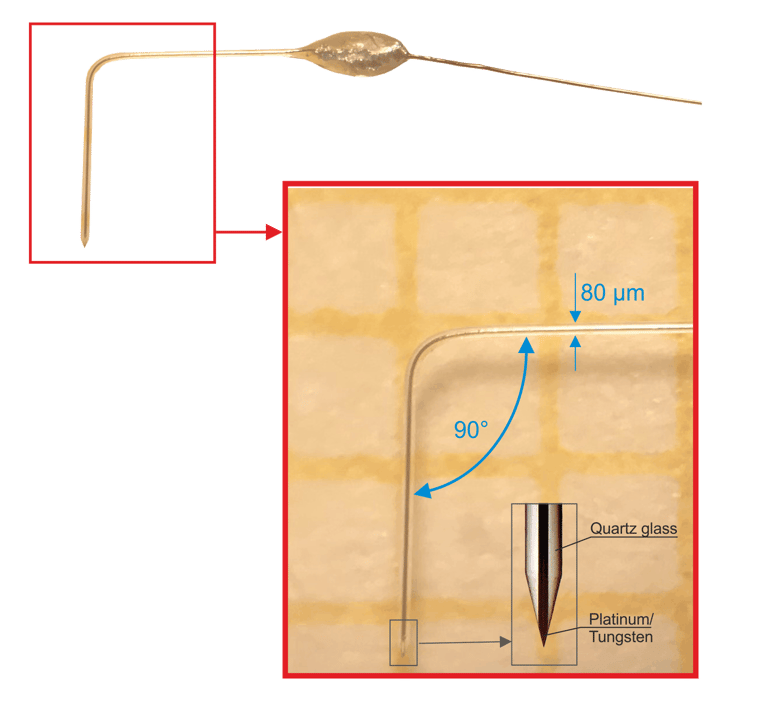
Material: Quartzglass insulated Platinum/Tungsten
Unique manufacturing technique allows to bent the electrode fiber
Customized angles, standard angle app. 90°
Customized connectors or open end
Customized electrode holder for angled electrode implantation
Recording Electrode for Optical Imaging applications
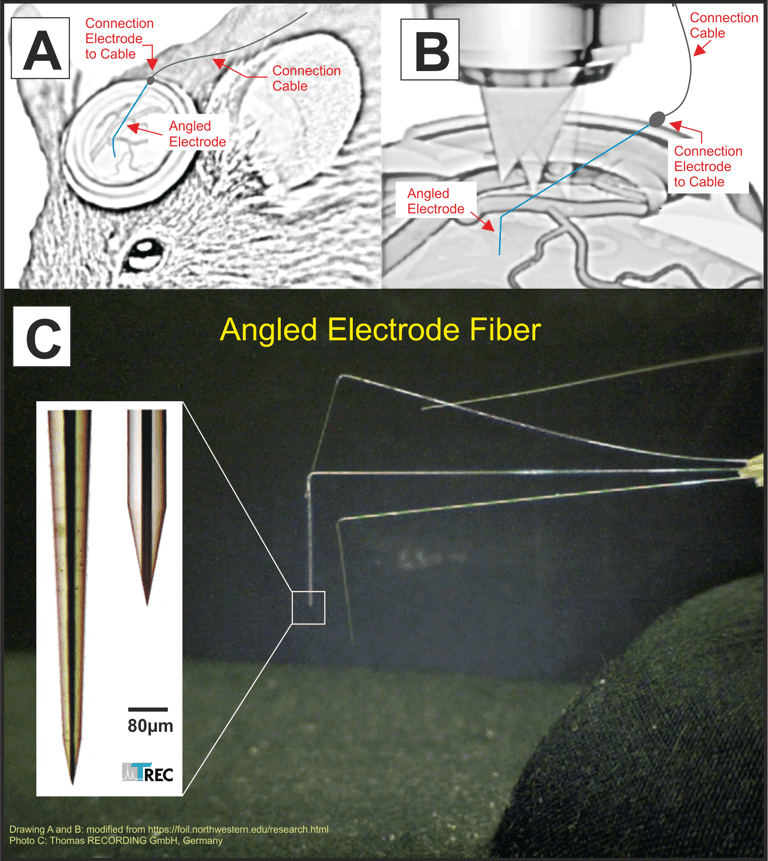
The picture on the right side shows an extracellular recording electrode in a rat brain. In extracellular recordings for optical imaging, where you don't want the electrode to obstruct the visual field for the microscope, the recording electrode must meet several key requirements to ensure effective recording and minimize interference with the imaging process. Thin and Narrow Electrodes: The electrode should be as small as possible in diameter to minimize obstruction. Microscale Geometry: A shank that is small enough in width and length to allow the optical system to focus on the tissue of interest without interference. Our microelectrode fibers are very thin (80 µm) so they are narrow enough to avoid significant visual field blockage. Transparent Coatings: Electrode surfaces, particularly those that are exposed to light during imaging, should ideally have a coating that does not interfere with the microscope’s imaging, such as transparent coatings. Our electrodes are insulated by quartz glass!
Request Information
Location
Winchester Strasse 8
35394 Giessen, GERMANY
Hours
Mo.-Fr. 8:00 a.m - 4:00 p.m.
Central European Time (CET)
Sa. - Su. Closed
info@ThomasRECORDING.com