Heptodes
(Seven Core Fiber Microelectrodes)
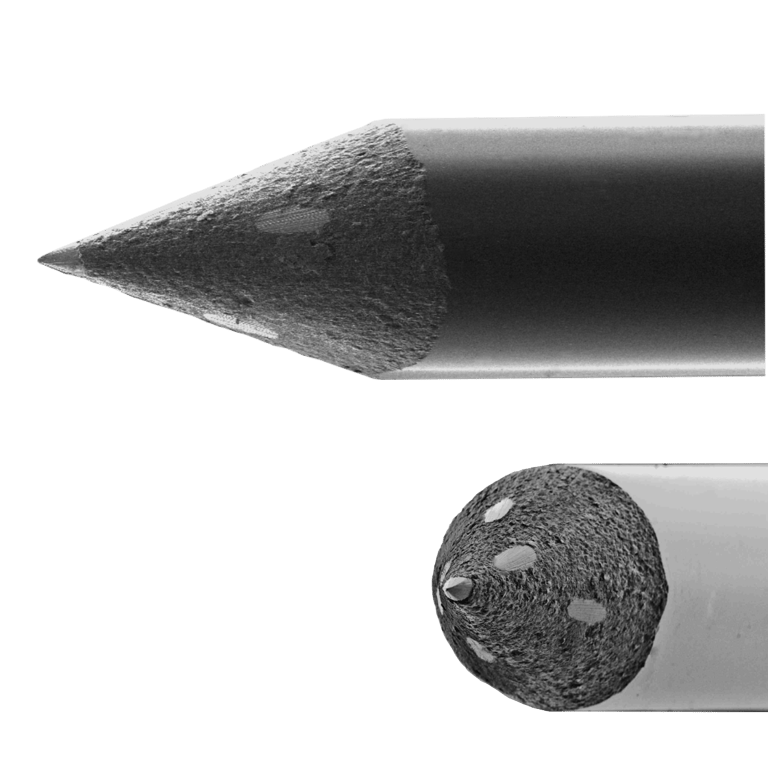
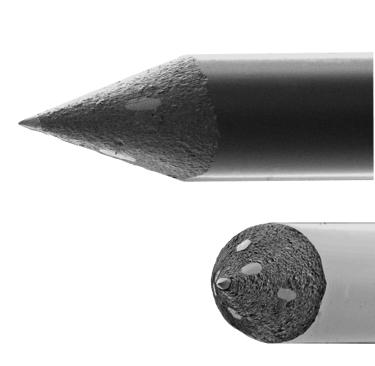
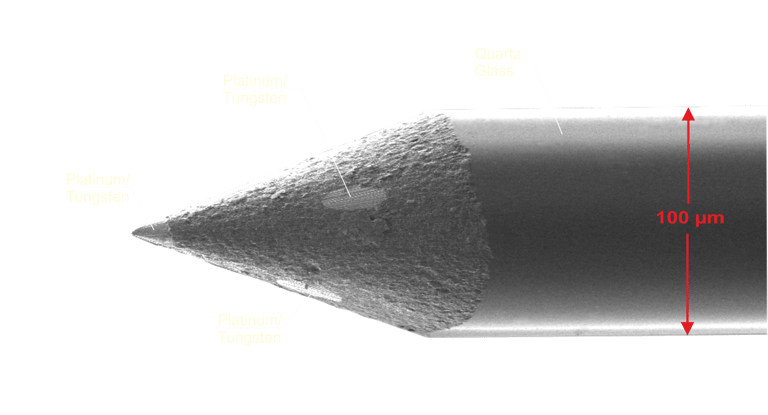
The Thomas RECORDING multicore microelectrodes were designed by Heribert Reitboeck and Uwe Thomas in 1987 in the Reitboeck lab at the University of Marburg, Germany. The Thomas RECORDING heptode is a fiber microelectrode with an outer diameter of 100µm and 7 individual metal cores insulated from each other by quartz glass. Thomas RECORDING heptodes are very well suited for single unit isolation from a multi-unit-recording. A major problem in extracellular microelectrode recording from cell-dense regions of the brain is the separation of spikes originated from different neurons. The stereotrode method, first described by McNaughton and others [1] is most effective for this purpose. It was reported by Doerr & Schanze [2] that there is a significant improvement of spike sorting performance when using heptodes rather than tetrodes especially in brain areas with high cell densities.
Product Description
Key Features
Material: Quartz glass insulated Platinum/Tungsten (95%/5%)
7 metal cores
Fiber diameter of 100µm
Unique material combination
Biocompatible materials
Well suited for acute and also for long term chronic recordings
Very close electrode spacings are possible (down to 100µm) when using Thomas microdrives
very thin shafts minimize tissue damage
Suitable for cortical as well as deep brain recordings
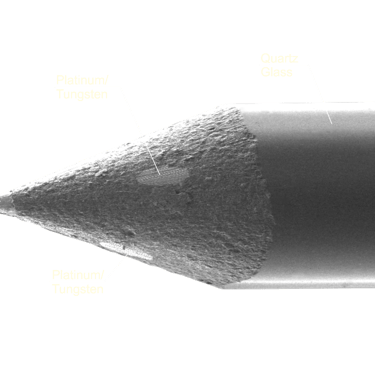
Heptode Types
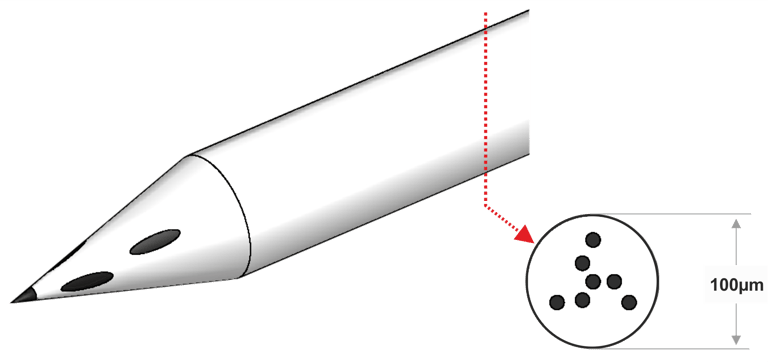
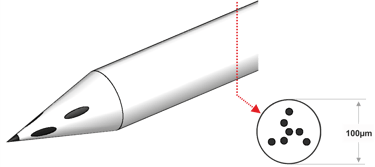
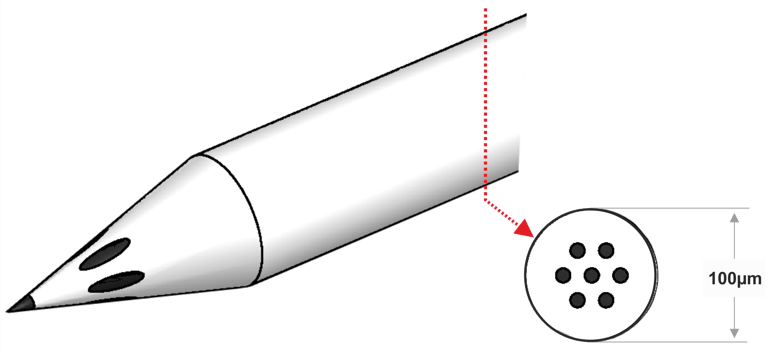
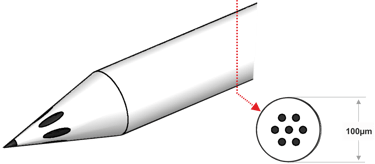
Standard-Heptode
3D-Heptode
Recording Quality
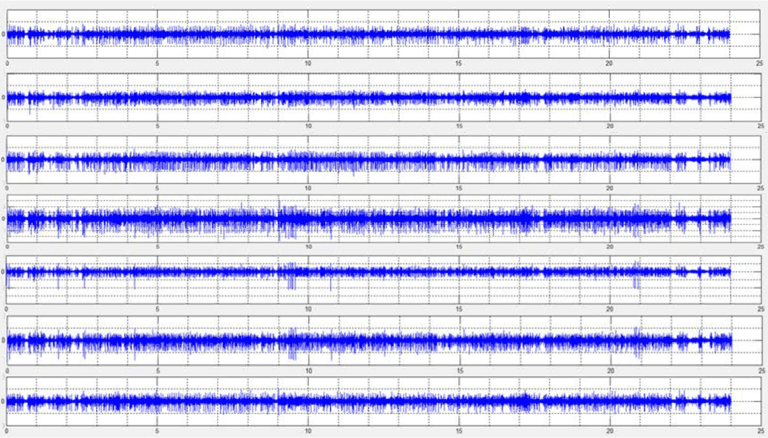
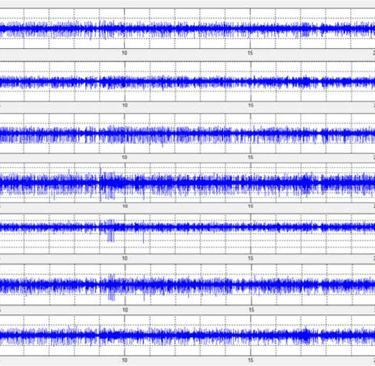
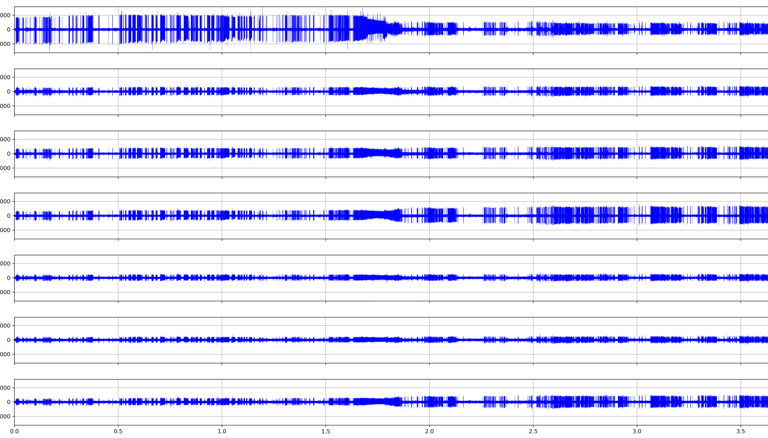
The pictures show extracellular recordings made with a Thomas RECORDING heptodes loaded to a Thomas Heptode Matrix Drive.

Ordering Information
Thomas RECORDING heptodes are available for Thomas microdrives with rubber tube drive (e.g. Mini Matrix and Eckhorn Matrix ) or for motorized and manual single shaft electrode microdrives (e.g. Thomas MEM).
Heptodes for Thomas Rubber Tube Drives
(Mini, Eckhorn or Thomas Matrix)
Heptodes for other Manipulator
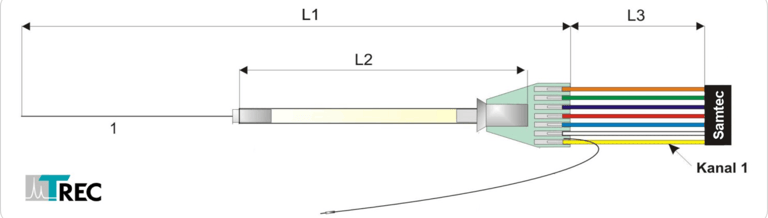
Article numbers:
AN000353 (Eckhorn, Thomas Matrix, Tip shape D)
AN000553 (Mini Matrix, Tip shape D)
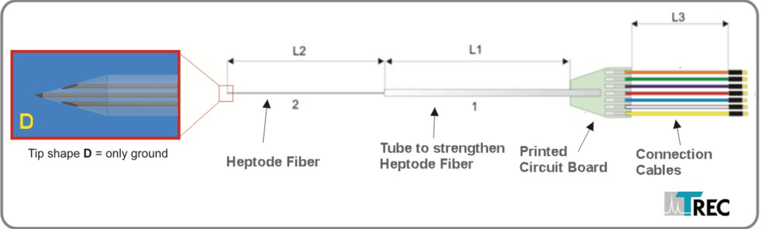
Article numbers:
AN000150
Selected Publications
[1] McNaughton B, Barnes CA, O´Keefe J. (1983)
The stereotrode: a new technique for simultaneous isolation of several single units in the central nervous system from multiple unit records. J Neurosci Methods 1983; 8: 391-397.
[2] Doerr, C. & Schnaze, T. (2015).
Are Heptodes better than Tetrodes for spike sorting? ScienceDirect; IFAC-PapersOnLine; Volume 48, Issue 20, 2015, Pages 94-99
Request Information
Location
Winchester Strasse 8
35394 Giessen, GERMANY
Hours
Mo.-Fr. 8:00 a.m - 4:00 p.m.
Central European Time (CET)
Sa. - Su. Closed
info@ThomasRECORDING.com